
This article is an adaptation of a webinar given by Adam Blanning, MD
Resilience and Human Adaptation
There are certain ways that human beings respond when life becomes uncertain. We become more watchful, more vigilant, more protective. We try to orient ourselves toward what feels safe and manageable. When circumstances feel unpredictable or disorienting, certain aspects of our physiology naturally increase their activity. We become more alert, more guarded, more focused on avoiding risk.
That is understandable. But eventually, other questions begin to emerge:
How do we sustain ourselves under these conditions?
How do we remain healthy while also remaining vigilant?
One of the helpful aspects of Anthroposophic Medicine is that it tries to connect experiences in the world around us with different kinds of processes: physiological, emotional, and spiritual processes.
And this idea of process is important.
Healing Through Processes Rather Than Substances
Rudolf Steiner once remarked, while speaking about anthroposophic medicines:
“The most significant aspect of our remedies, I would say, is that we are attempting to heal with processes rather than with substances.”
That offers a very different orientation toward health. It invites us not only to focus on disease, risk, or dysfunction, but also to ask: “ What are the processes that support health?”
This is not unique to anthroposophic medicine. Many traditional healing systems have approached health dynamically, as a balance of interacting processes rather than a fixed state.
Traditional Chinese medicine, for example, understands health through the interplay of yin and yang — balancing and counterbalancing processes that exist in continual relationship.
Ayurvedic medicine similarly speaks about the doshas and the interaction of elemental qualities — earth, water, air, fire, and space — emphasizing not static categories but relationships and movement between them.
Even alchemical traditions studied transformation as a dynamic process. Substances themselves were understood less as fixed material objects and more as expressions of living processes.
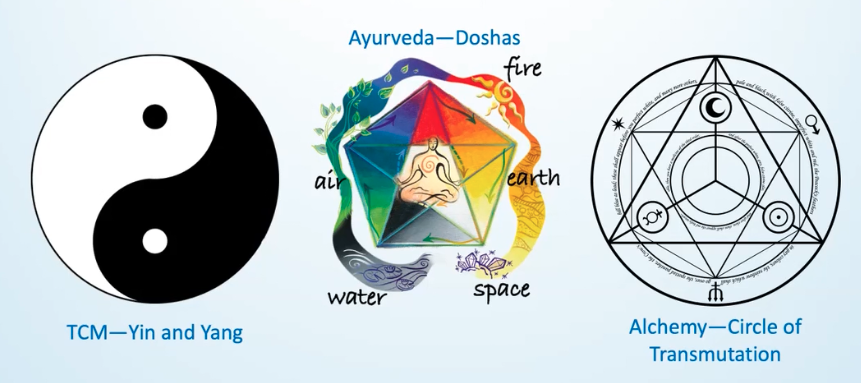
In each case, health is not viewed simply as the absence of disease. It is understood as the balancing and harmonizing of dynamic forces.
Salutogenesis and Sense of Coherence
One of the more interesting frameworks for understanding resilience emerged through the work of Aaron Antonovsky, who introduced the concept of salutogenesis.
Rather than asking only: “What causes disease?”
Antonovsky asked: “What supports health?”
He became interested in why some individuals maintained psychological and physical coherence despite profound adversity. From this work emerged the idea of Sense of Coherence — the degree to which individuals experience life as: comprehensible, manageable, and meaningful.
Several studies exploring the sense of coherence are particularly interesting because they suggest that the way human beings orient themselves toward life may significantly influence resilience and well-being.
One study from 2019 examined the relationship between sense of coherence, health, and work engagement among nurses working in demanding situations (1). Nurses who scored highly on measures of sense of coherence reported:
fewer work-related family conflicts,
better overall health,
greater engagement with their work compared to peers with lower scores.
That is remarkable. To be in a stressful environment and yet remain positively engaged — not merely enduring the work but actually maintaining a sense of vitality and connection within it — suggests that something deeper than simple coping is involved.
Another study looked at women living in disadvantaged circumstances and found that a strong sense of coherence was associated with significantly lower rates of generalized anxiety disorder, even in environments marked by poverty, violence, and chronic stress (2).
And another large study involving more than 18,000 participants found that a strong sense of coherence was associated with a 20% reduction in all-cause mortality (3). Even after adjusting for smoking, diet, exercise, and socioeconomic status, much of the protective effect remained.
What becomes interesting in these studies is that resilience does not appear simply as optimism or personality. It seems connected to the way individuals are able to orient themselves toward life and work with what they encounter.
This is where the three qualities of a sense of coherence come into play:
Does life make sense? (comprehensibility)
Do I feel that I have resources available to meet what life is asking of me? (manageability)
And does life continue to feel meaningful, even under difficulty? (meaningfulness)
These are not merely philosophical questions. Increasingly, they appear connected to health itself.
Manageability and Adaptive Capacity
Interestingly, when exploring the three qualities of coherence — comprehensibility, manageability, and meaningfulness — it may actually make sense to begin with manageability.
When human beings feel overwhelmed, depleted, or unable to meet the demands being placed upon them, it becomes much harder to experience life as either coherent or meaningful. A certain degree of inner and outer support is often necessary before higher levels of orientation and reflection can emerge.
One important aspect of manageability, then, is recognizing that human beings need diverse tools for maintaining balance. There are many situations in life where effort and control are necessary and helpful. Working harder, focusing attention, exerting discipline — these capacities are important.
Modern medicine also tends to work primarily through these kinds of processes:
controlling
blocking
suppressing
Intervening
Stabilizing
Many medications are literally “anti” something: anti-inflammatory, antihistamine, antibiotic.
Others function by blocking processes: beta blockers, acid blockers, ACE inhibitors.
These are important tools. But they are not always sufficient by themselves.
Sometimes doing more, trying harder, or exerting greater control can actually intensify imbalance.
Pain, anxiety, and sleeplessness are good examples. Telling someone not to worry more or simply to try harder to sleep rarely works very well.
What is often needed instead are balancing processes:
movement,creativity,
rhythm
flexibility
rest
warmth
Restoration
Human beings cannot remain healthy through vigilance alone. At some point, nourishment must consciously return.
Imagine two very different gestures within human experience. In one, activity streams outward through the limbs — movement, engagement, interaction with the world. In another, activity becomes quiet and inward, centered more in observation, perception, and contemplation.
This polarity can also be seen within the human form itself.
At the top of the body we find rounded structures — the skull, the upper ribs — forms associated with observation, perception, and inwardness. Further downward, structures become increasingly linear, extending outward into movement and engagement with the world.
Between these polarities lies a rhythmic middle space: breathing, circulation, oscillation, and movement back and forth.
Anthroposophic medicine speaks about these as:
the nerve-sense system,
the metabolic-limb system,
and the rhythmic system mediating between them.
Health depends not upon one system dominating the others, but upon living balance and flexibility between them.
Sensory Health and Human Regulation
Comprehensibility, the traditionally “first” aspect of coherence, has to do with our ability to orient ourselves meaningfully within experience.
This becomes especially relevant when thinking about sensory life.
Human beings live through the senses. We orient ourselves not only intellectually, but through direct encounter with the world: touch, movement, smell, warmth, balance,and human presence.
Modern technology has made extraordinary forms of communication possible. Tools like Zoom allow people to remain connected across great distances in ways that otherwise would not be possible.
But there is also a danger in confusing representation with full experience.
Imagine standing in a crowded museum surrounded by people holding up phones and headphones while looking toward the Mona Lisa. Physically, everyone is present before the painting itself. Yet many people are simultaneously experiencing the painting through screens, commentary, photographs, or mediated representations layered over the direct encounter.
The question arises:
“ Have we truly experienced the painting itself?
Or have we primarily experienced representations of it?”
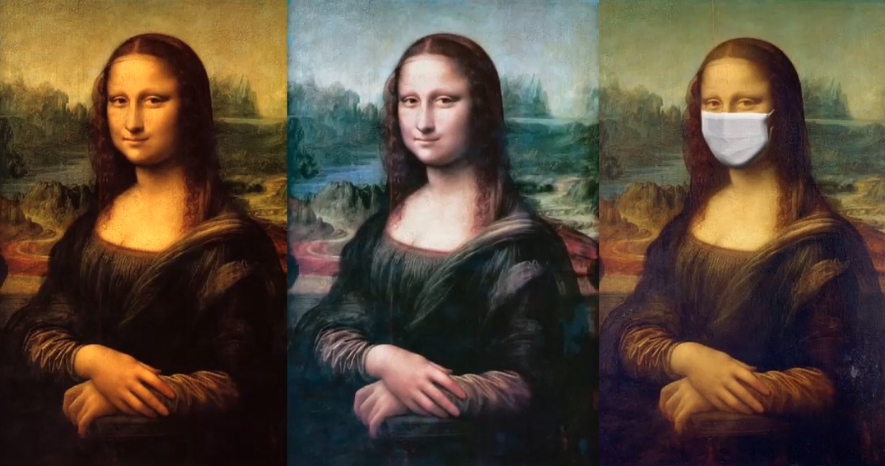
The same question can be asked in other areas of life.
Seeing an image of a forest is not the same as walking through one. A direct encounter with nature involves far more than visual perception alone. One experiences:
temperature,
scent,
texture,
movement,
balance,
humidity,
Sound,
and the feeling of one’s own body moving through space.
Research on “forest bathing” in Japan has shown measurable effects on: cardiovascular function, immunity, inflammatory markers, emotional wellbeing, anxiety, and depression (4).
What is striking is that these effects arise not through isolated stimulation of one sense, but through whole-person sensory experience.
Technology gives us useful tools, but it cannot fully replace embodied human encounter. Human beings require richer forms of sensory orientation in order to remain healthy and coherent.
And perhaps this raises a broader question for modern life: “ How much of human experience has gradually become mediated, filtered, abstracted, or represented rather than directly lived?”
Because resilience may depend not only upon information, but upon genuine sensory participation in the world.
Meaningfulness and Health
Meaningfulness may be the most difficult aspect of coherence to describe, yet perhaps the most important.
Meaning has to do with whether life continues to feel emotionally significant and worth engaging with, even under challenge.
Modern medicine understandably focuses on dysfunction, pathology, and the correction of what has gone wrong. Yet another question sometimes emerges alongside this: “Are there circumstances in which illness participates not only in loss, but also in adaptation, development, or correction?”
This is a delicate question and should be approached carefully. It does not romanticize suffering, nor does it deny the very real pain and limitation illness can bring. But it does raise the possibility that living systems sometimes develop capacities precisely through challenge.
One area where this question has been explored involves the relationship between microbial exposure, immune development, and allergic disease.
Studies associated with the “hygiene hypothesis” have observed that children raised in environments with greater exposure to microbial diversity — including farms, fermented foods, and less sterile living conditions — often demonstrate lower rates of allergies and certain inflammatory conditions. One research study saw that hand dishwashing versus machine dishwashing was associated with a reduced risk of allergic disease development, speculating that a less-efficient dishwashing method may induce tolerance via increased microbial exposure (5).
Research such as Exposure to Environmental Microorganisms and Childhood Asthma (6) and related farm-exposure studies have suggested that contact with a wider range of microbial and environmental stimuli may help support more balanced immune regulation early in life.
What becomes interesting here is not the simplistic idea that “more illness is better,” but rather the observation that immune systems appear to develop partly through meaningful interaction with challenge and adaptation.
From this perspective, illness is not viewed only as mechanical failure. Living systems may also respond to challenge through processes of learning, adaptation, reorganization, and growth.
I was once discussing with a group of medical students the idea of simply lying on the floor in the midst of their study. The thought of it astounded them, and they actually asked permission — whether that really could happen.
To say that we have created a system where there is so much duty and responsibility that two minutes on the floor becomes a frightening thought suggests that perhaps we need to work more consciously with dynamics of process.
We need to protect whole human experiences.
Human beings cannot remain indefinitely in states of vigilance, effort, and activation. At some point, restoration becomes necessary.
It will be interesting to see how many of the experiences people move through eventually become opportunities for reorientation, growth, or transformation.
We need to be careful not to lose sight of the possibility that illness can sometimes become part of a path toward growth. That requires a certain kind of trust.
And perhaps it also helps us begin asking different kinds of meaningful questions:
What nourishes me?
What restores me?
What supports balance?
What helps me remain connected to life?
When fostering resilience, the questions are just as important as the answers.
1. Relationship between sense of coherence, health and work engagement among nurses. J Nurs Manag. 2019 Nov;27(8):1620-1630
2. A strong sense of coherence associated with reduced risk of anxiety disorder among women in disadvantaged circumstances: British population study. BMJ Open. 2028 Apr 23;8(40):e018501
3. Sense of coherence, lifestyle choices and mortality. J Epidemiol Community Health. 2008 Sep;62(9):829-31
4. Medical empirical research on forest bathing (Shinrin-yoku): a systematic review. https://pubmed.ncbi.nim.nih.gov/31787069
5. Allergy in children in hand versus machine dishwashing. https://pubmed.ncbi.nim.nih.gov/25713281/
6. Ege, Markus J., Melanie Mayer, Chuan-Sheng Wang, Reinhard Hashemian, Vincent Legna, Robert Krauss-Etschmann, Martin Guenthner, et al. "Exposure to Environmental Microorganisms and Childhood Asthma." New England Journal of Medicine 364, no. 8 (2011): 701–9. doi.org.